 Skip to content

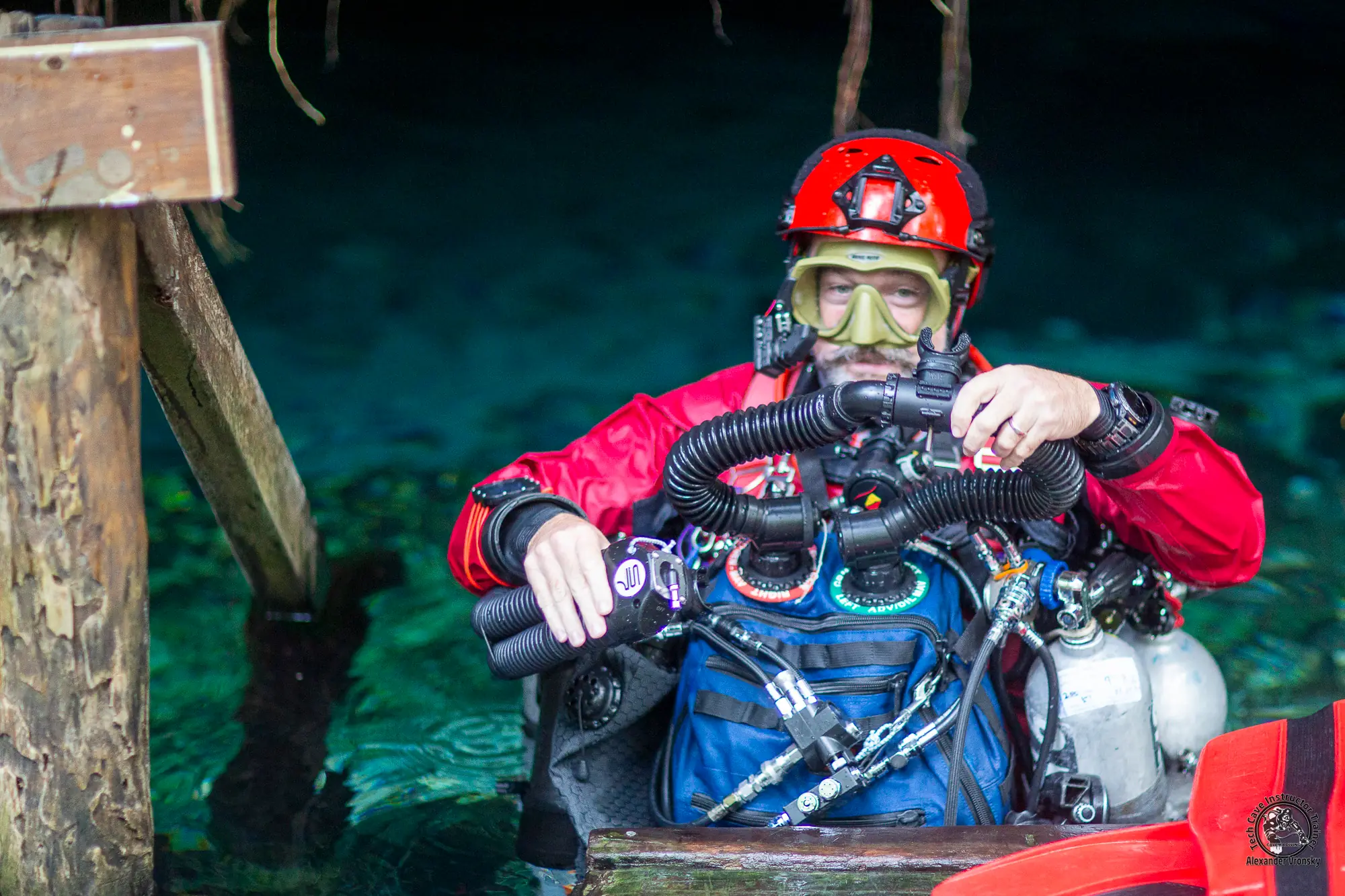
When I teach a crossover course from one rebreather to another, my first question is not about depth or the scrubber. I ask where the oxygen goes on your unit when you press the manual add button. Most divers answer “into the loop”. That is true, but not complete. The exact point of the loop where it enters decides what you see on your controller when you breathe that addition, and how easy it is to make a mistake. The two lines that started the mass era of closed circuit rebreathers, Inspiration with its descendants and Meg with its descendants, solve this in opposite ways. And each solution has its own logic.
First, a word on terms. Here, the descendants of Inspiration means the line of the same maker, AP Diving: the Evolution, the units on Vision electronics, and today’s XPD, EVP and EVO. The descendants of Meg means the line of InnerSpace Systems: the manual COPIS and today’s Meg 15. Other units later branched off from both schools, and they come at the end.
What came before 1997
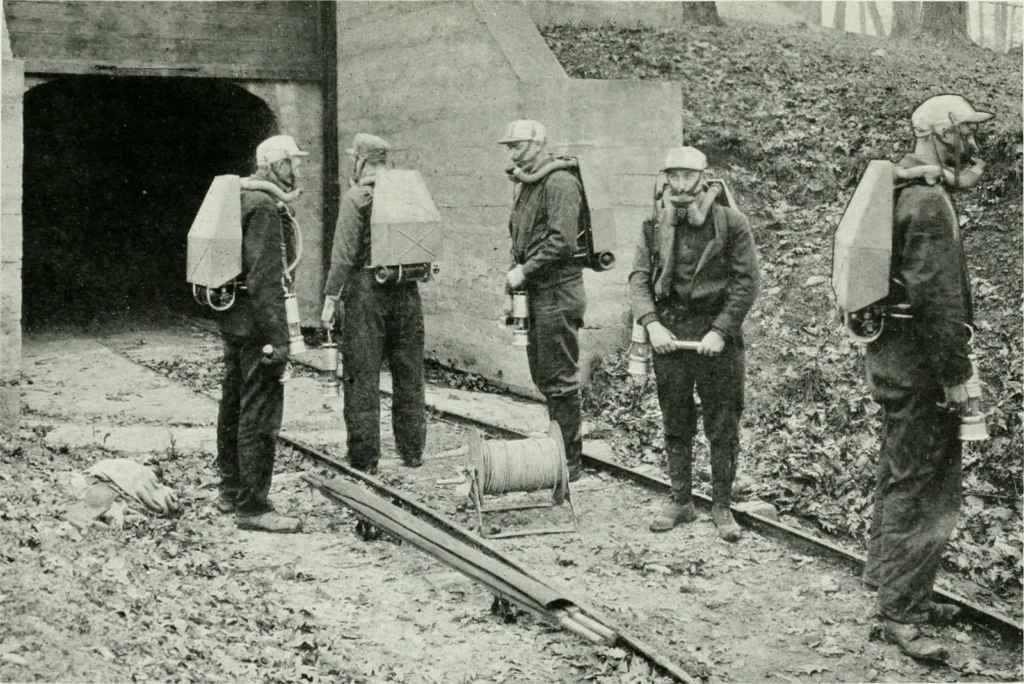
The idea itself is old. In the 1870s Henry Fleuss built an oxygen rebreather for rescue work in mines [1]. The first electronic closed circuit unit that was really sold, the BioMarine CCR-1000, appeared in 1969-1970. It was made by engineers who had designed breathing systems for astronauts before. A few hundred units were sold, mostly to commercial divers [2]. In 1970 Walter Starck and John Kanwisher brought the Electrolung to the sport market. It cost as much as a new pickup truck, and the editor of Skin Diver dived it to 300 feet off Andros. A few years later the maker closed its marine division, and the project died [3]. The industry remembered this lesson for a long time.
Cave divers started the next wave. From 1984 Bill Stone built the Cis-Lunar units for flooded caves. He chose not to use the military MK16 or the space shuttle suit system, because they were too risky for work under a cave ceiling [4]. In the 1990s, the first Rebreather Forum decided that semi-closed units would be the first to take hold among sport divers, because they were simpler and cheaper [5]. And so it was: in 1995 the Dräger Atlantis came out. But only two years later everything changed.
Inspiration and its descendants: a unit you can certify
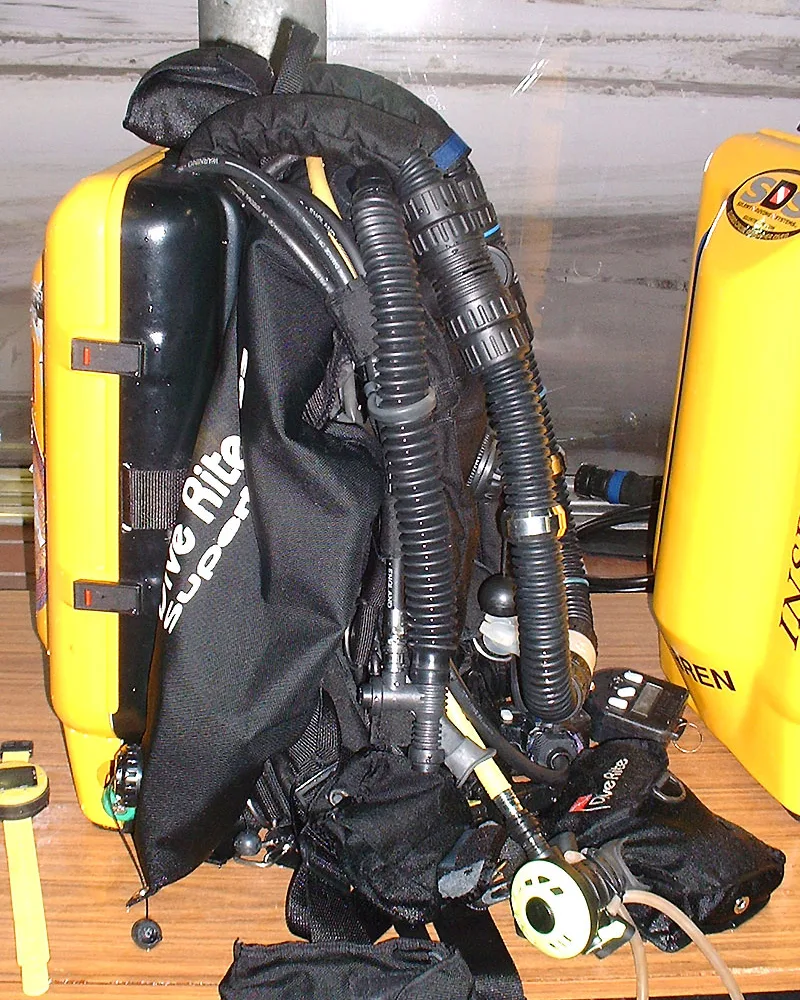
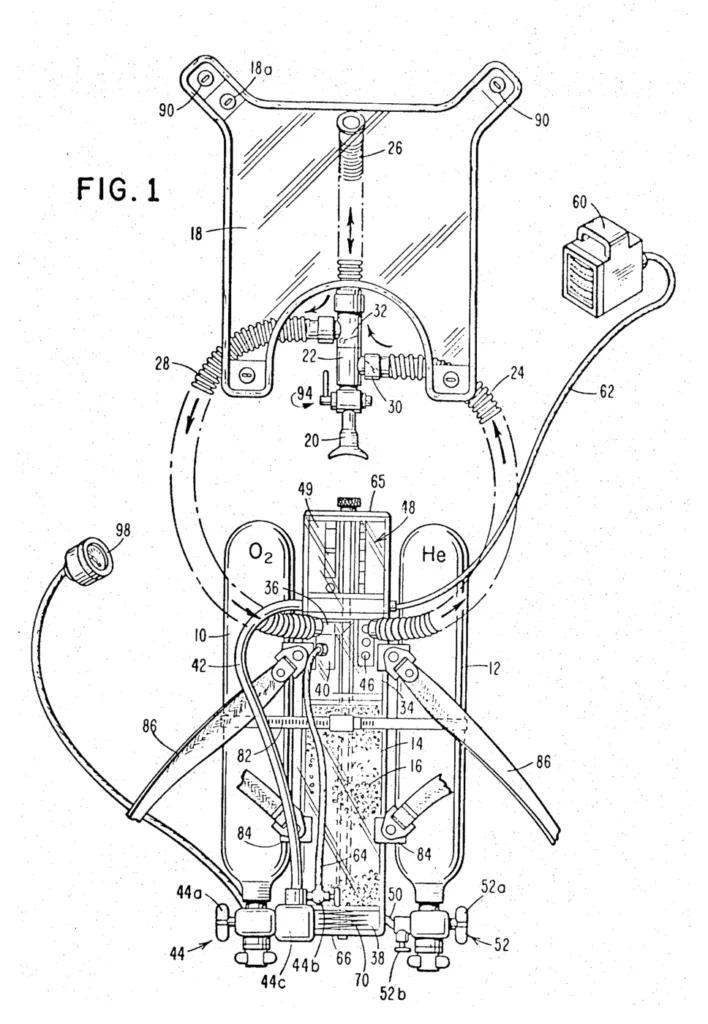
The prototype was put together from plumbing parts by British diver Dave Thompson. Martin Parker’s factory, which made Buddy buoyancy compensators, spent several years turning it into a production electronic unit. Parker jokingly called it the Perspiration [1]. The Buddy Inspiration came out in November 1997 [6]. AP Diving calls it the first production closed circuit rebreather and the first rebreather with CE certification, with two independent oxygen controllers in a master and slave setup [7].
This was the philosophy of a finished product: one configuration, factory control, outside certification, over-the-shoulder counterlungs and an axial scrubber. This predictability is what opened the rebreather to clubs and training agencies. In 2005 AP showed the Vision electronics and the compact Evolution [8]. Today the line is the XPD, EVP and EVO with shared electronics, and the electronics of the very first Classic are no longer serviced because the parts are gone [9]. The logic of the loop and the oxygen feed has not changed in all these years: Vision runs the same oxygen control program as the Classic [15].
Meg and its descendants: a unit built for the task
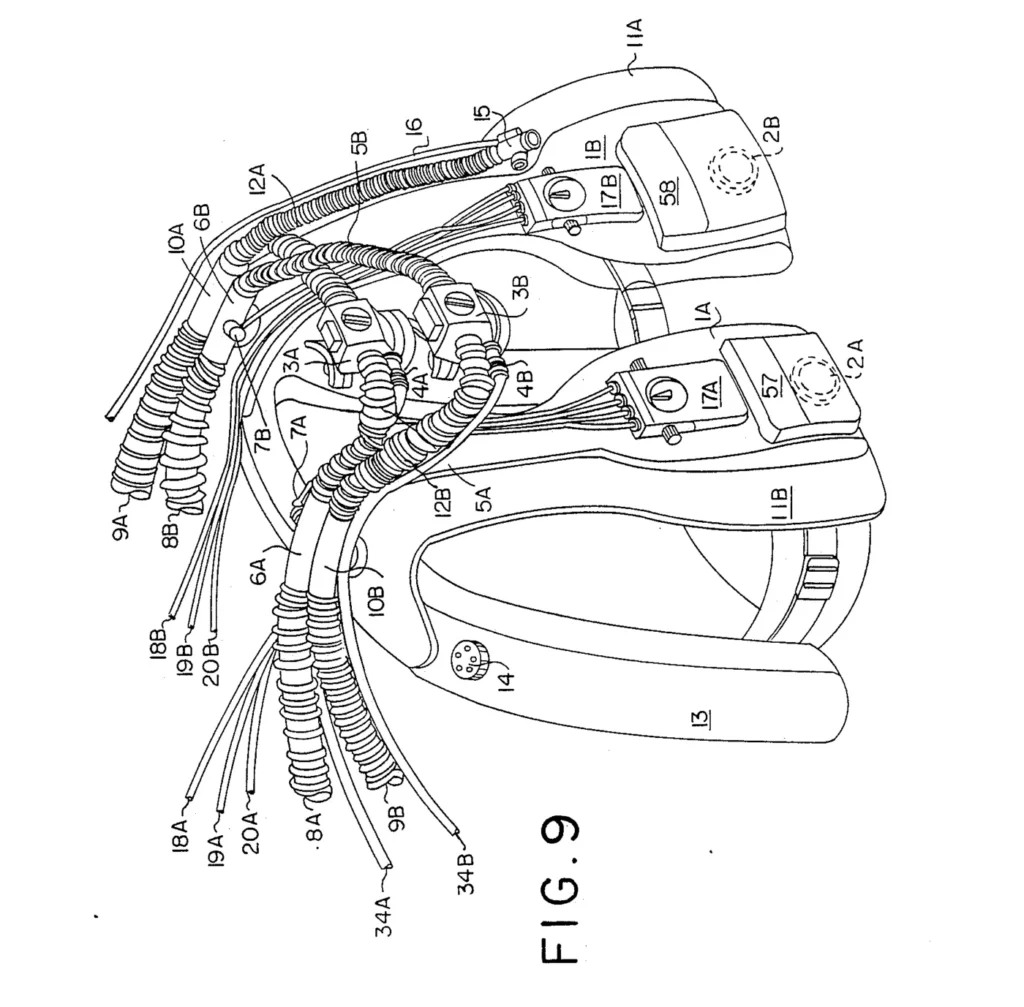
Leon Scamahorn came from US Army combat diving. In 1998 he bought InnerSpace Systems and set out to build the toughest unit on the market. He named it after a prehistoric shark [10]. From the start the Meg was a platform: the head, a radial scrubber in several sizes, the cylinders and the harness are chosen for the task. The body is aluminium, and the automatic diluent valve is built into a counterlung [11]. As on the Inspiration, the counterlungs sit over the shoulders. The US Navy noted that they sit level with the centre of the lungs and lower the hydrostatic load [12].
The first descendant of the Meg was the manual COPIS. In essence it is the same Meg without a setpoint controller and without a solenoid: a constant flow of oxygen plus manual additions. Later it could be turned into an electronic unit by buying a head [13]. Shearwater, a company that is hard to imagine rebreathers without today, started in 2004 with boards for the Meg [14].
The loop: left to right and right to left
Let us start with the simple part. On the Inspiration and its descendants, gas runs through the mouthpiece from left to right, as seen from the diver. You inhale from the left and exhale to the right, and from above the loop turns clockwise [15]. On the Meg and its descendants it is the other way round, right to left: you inhale from the right and exhale to the left [16]. On its own this looks like a small detail, like driving on the right or on the left. But together with the oxygen feed point, it changes how the unit behaves.
Where the oxygen from the MAV goes
On the Inspiration and its descendants, the manual oxygen button sits on the right, on the exhale counterlung. Diluent is on the left, on the inhale counterlung, and the automatic diluent valve goes there in place of a tee [15]. Oxygen from the MAV enters the exhale side and passes the scrubber, then the lid with the sensors. Only after that does it reach the inhale side and your mouth. This is the longest path: as far from your inhale as possible, and past the sensors first.
On the Meg and its descendants, manual oxygen goes into the inhale counterlung, flows around a baffle and comes straight to the mouthpiece. The sensors see it only after the gas makes a full circle: mouth, exhale side, scrubber, head [16]. The shortest path leads to you, not to the sensors.
Why Inspiration and its descendants are built this way
The logic of this line is built around the sensors. Everything you add by hand has time to mix with the loop gas in the scrubber and to pass the cells before you breathe it. Pressing the button cannot put gas into your lungs that the controller has not measured yet. The price of this solution is delay. You press the button, and the numbers do not change at once. The AP manual asks you to wait about five seconds after a manual addition before you read the display [15]. For a unit built for the mass diver and for certification, this is a clear choice: slower, but the mix is checked and smoothed before you breathe it.
Most of the market took over this logic. On the Dive Rite O2ptima, the oxygen button sits on the exhale counterlung [17]. On the Divesoft Liberty, manual oxygen addition is also on the exhale side, and the maker says why: so that you do not breathe a pO2 that is too high at depth [18].
Why Meg and its descendants are built this way
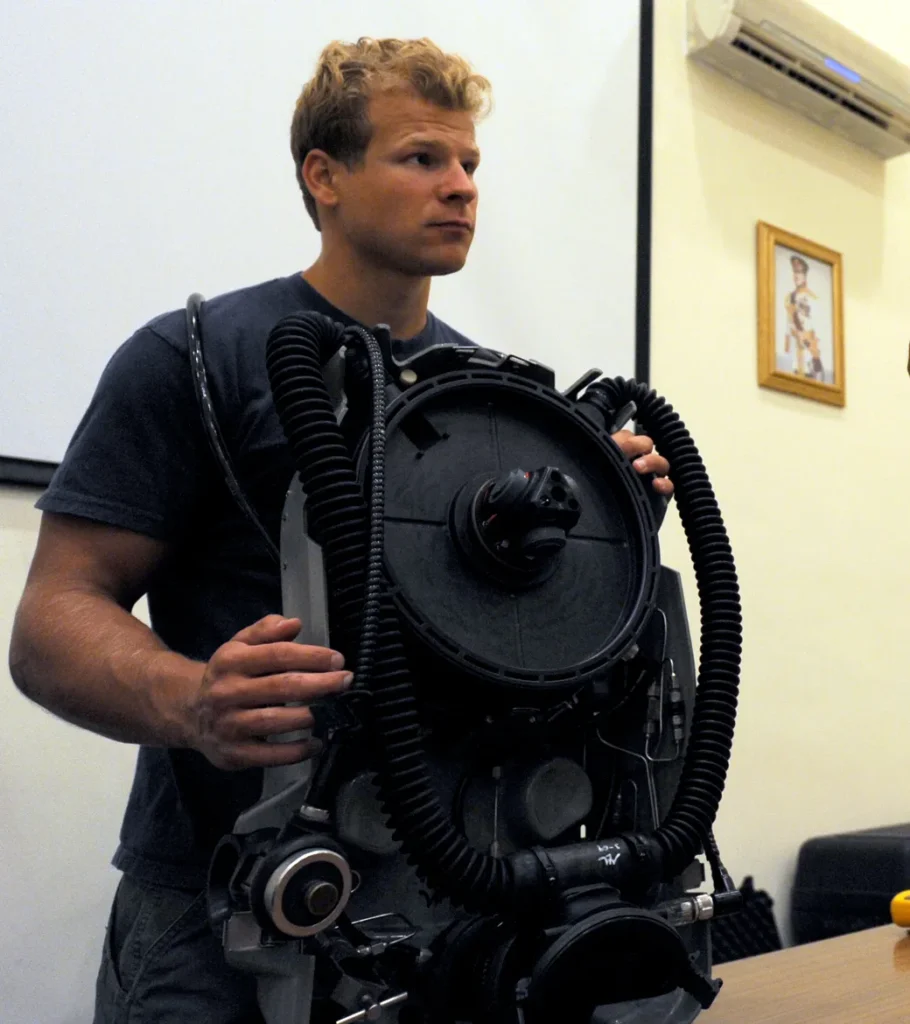
The logic of this line is built around the diver. If you add oxygen by hand, something has gone wrong, and most often it is a low pO2. Then the addition must reach your lungs as fast as possible. The InnerSpace FAQ document explains it this way: manual addition on the Meg brings you out of hypoxia faster, and the same manual injection layout is used on the military MK15 and MK16 [16]. This is military logic, where a fast response matters more than display numbers that run ahead of your breath. The price: the display lags behind what you breathe. If you press the button again and again while you watch numbers that have not updated yet, it is easy to add too much oxygen.
The same document says honestly that this is a question of philosophy, and shows how to switch to the other one. The oxygen hose can be made longer and routed to the exhale counterlung, and then the path is the same as on the Inspiration [16]. On the Meg and its descendants, the feed point stays part of the configuration, not a law.
And the solenoid is the other way round
The most interesting part is that both lines set up the automatic feed as a mirror of the manual one. The solenoid of the Inspiration and its descendants injects oxygen into the scrubber lid, which the manual itself calls the mixing chamber. The sensors that read the gas on its way to the inhale side sit there too [15]. So the firmware was damped, and the cells do not react to every injection [16]. The Meg solenoid, in contrast, feeds oxygen down the canister wall, through the scrubber, and only then to the sensors [16]. On top of that, the APECS electronics have an adjustable pause between injections, from 4 to 8 seconds, so that the oxygen has time to mix without pO2 peaks [19].
So the Inspiration and its descendants feed automatically where the Meg and its descendants feed by hand, and the other way round. Each school keeps one feed close to the diver and the sensors and the other one far away. They just pick them differently.
What this means if you move from one line to the other
On the Inspiration the oxygen button is under your right hand, and on the Meg too, because its inhale counterlung is on the right. The movement is the same, but the result is opposite in time. On the Inspiration and its descendants, the sensors show the addition before you breathe it. On the Meg and its descendants, you breathe it before the sensors show it. A diver who brings the habits of one line to the other will either wait for numbers that come late or add too often. That is why I cover this as a separate topic on crossover courses, not as one line in the briefing.
Who went further
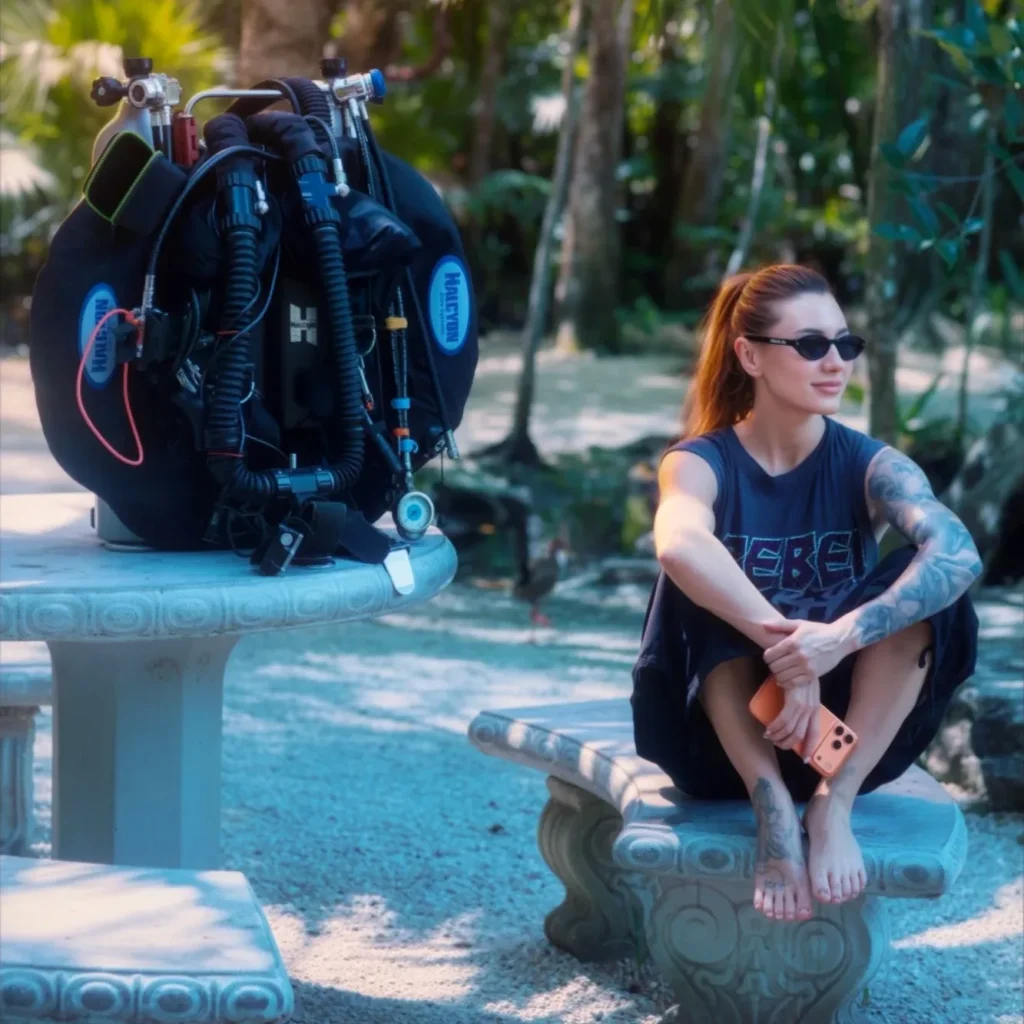
Several independent branches grew out of the Inspiration circle. Kevin Gurr, who learned from Bill Stone, made the Ouroboros in 2005 and the Sentinel in 2008 [20]. On the Sentinel the solenoid injects on the exhale side, and the oxygen passes the scrubber before it reaches the sensors [21]. Hollis later bought the Sentinel technology [20]. The Danish JJ-CCR is often seen as an heir of the Meg in spirit: tough, aluminium, with exchangeable electronics. But its roots are in the Inspiration. Jan Jørgensen taught on the Inspiration Classic and logged hours with Thompson on the first production units. Then he built his own unit with machinist Jan Petersen. The two Jans gave it the name JJ, and Thompson designed its back-mounted counterlungs [22][23]. The unit got CE at the end of 2010 [22].
From the Meg, the industry kept the main idea: the mechanics are separate, the electronics are separate, and the unit is built for the task. Shearwater, which started with boards for the Meg, became the computer of the JJ in 2007 and released the DiveCAN system in 2012 [14][24].
Where the GBM and S7 fit in this story
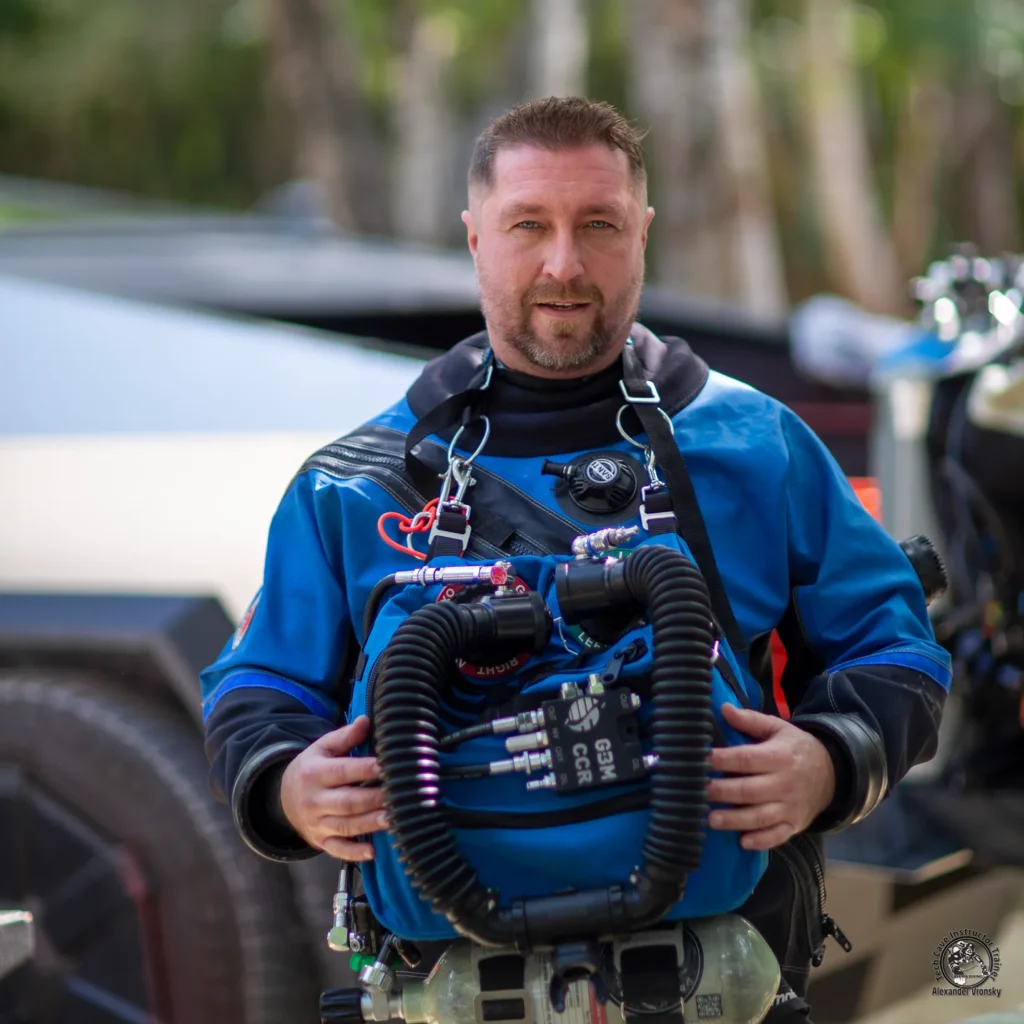
In form, the units I teach on stand apart, because they are not worn on the back. The GBM is mounted on the chest, the S7 at the side. Oxygen enters both through a needle valve that you set for your own consumption, and through a manual button, with no solenoid. The electronics show pO2, and you make the decisions.
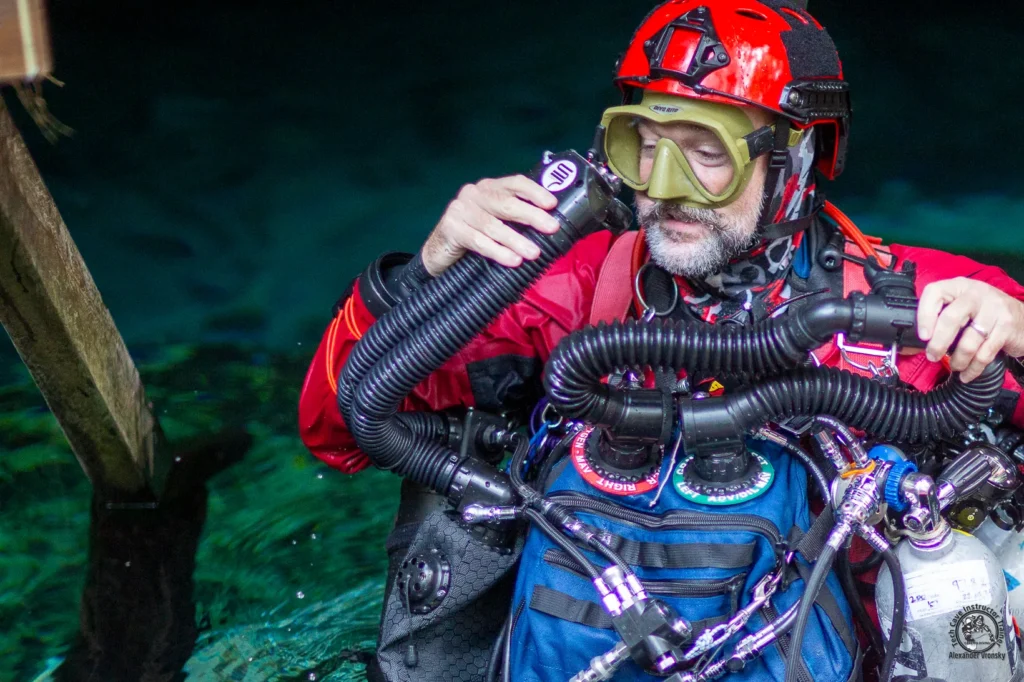
The GBM was made by Gregory Borodiansky, founder of Scubatron in New York. In his words, he took the chest mount layout from the Triton and from cave diver friends. The unit was born in 2020, when cave divers in the cenotes of Mexico, Mike Netto among them, asked him to build them one like his prototype [25].
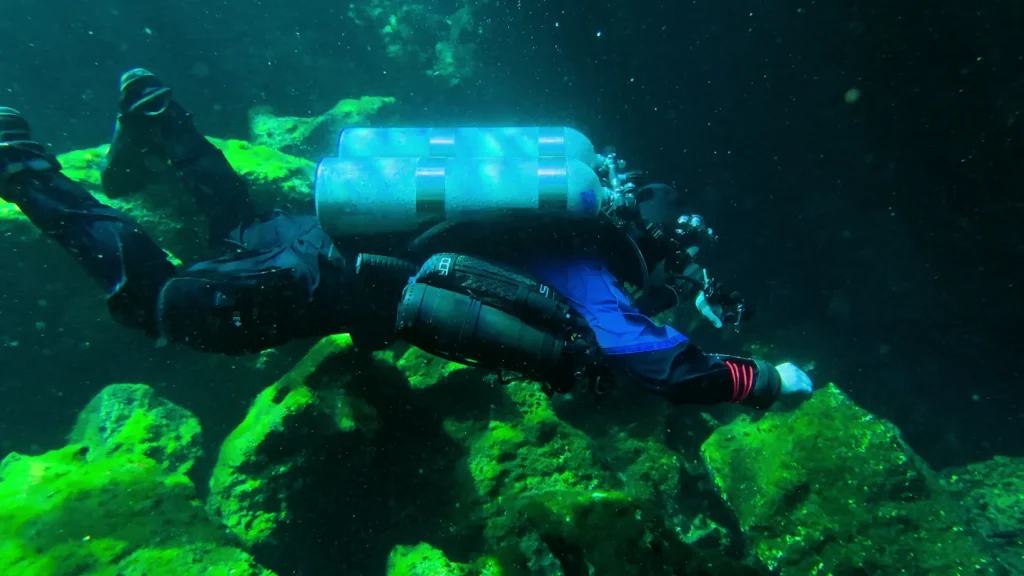
The S7 was designed by Andrew Goring from England, a cave diver and the owner of SUMP UK. The sidemount community knows him for minimalist sidemount and rebreather gear [26][27]. He began to build his own rebreathers around 2007, mostly chest-mounted ones, for a short loop. The S7 grew out of a layout with a small counterlung in front and the scrubber next to it. The first working version was a hybrid of a chest-mounted and a sidemount unit: compact, but too complicated to put on. After that, the counterlung and the scrubber were joined directly, with fewer parts [26]. Anton Zhuchkov brought the S7 into series production, and the Portuguese company SmartDive makes it [26][28].
But in the logic of the gas feed, both units are descendants of the Inspiration, with an important addition.
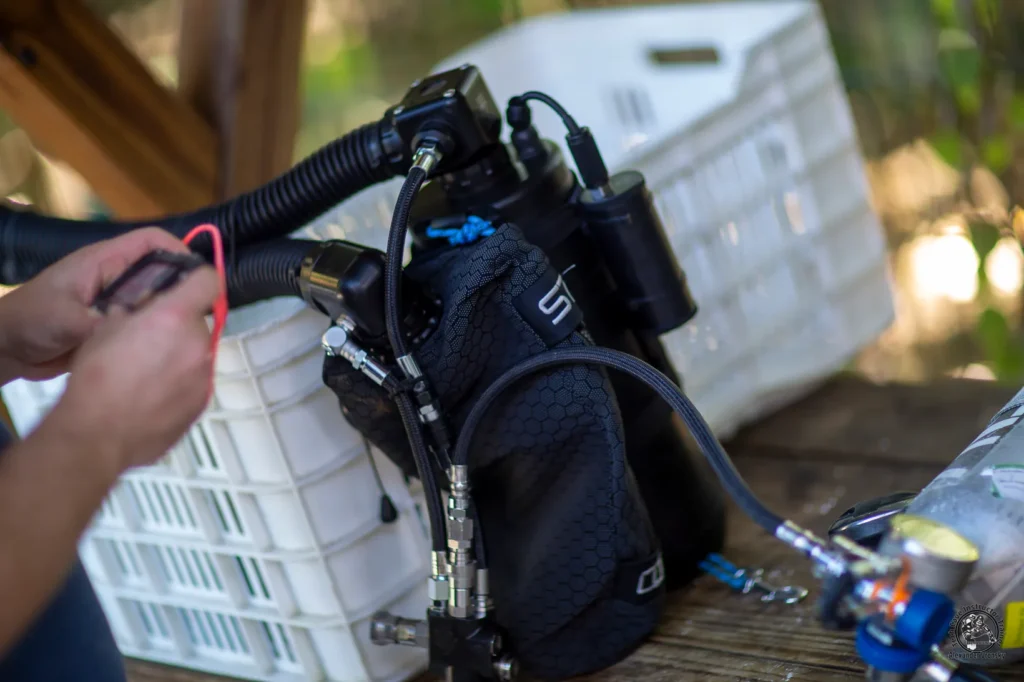
On the GBM, gas runs through the mouthpiece from left to right, as seen from the diver, as on the Inspiration. The needle valve, the oxygen button and the diluent button sit together in one gas block. The oxygen button is recessed into the body, so you do not mix it up with the diluent button by touch. From the block, gas goes to the feed fitting on the exhale adapter, before the exhale counterlung. Then it passes the counterlung, the water trap and the scrubber. Only after that does it reach the block of four sensors at the canister outlet and the inhale counterlung [25].
The GBM adds diluent in two places. The diluent button on the gas block sends it the same way as oxygen: to the exhale side, through the scrubber. This is handy for topping up the loop volume without a sharp jump in the mix at your mouth. And on the inhale adapter, after the scrubber and the sensors, sits the automatic diluent valve with its own button. This point is next to your inhale, and diluent from it reaches you in one breath [25].
The S7 follows the same logic. Oxygen from both the needle valve and the button enters the exhale side, before the counterlung, as far from the inhale as possible. Diluent enters as close to the inhale as possible, after the canister. The direction of the S7 loop depends on the side where the unit hangs. In the right-side version, gas runs left to right, as on the Inspiration and the GBM. In the left-side version it runs right to left, as on the Meg. The feed logic stays the same: oxygen is still on the exhale side, and diluent is still at the inhale.
Why is it built this way? Oxygen released far from the inhale has time to mix with the loop gas before it reaches the sensors and you. This protects you from sudden pO2 jumps, when almost pure oxygen ends up next to the cells or in your mouth. And diluent next to the inhale works as a fast brake. If there is too much oxygen in the loop, a diluent flush dilutes the mix right at the mouthpiece, and your next breath is already safer. So you get a double logic: oxygen far, diluent close. Slow, mixed gas keeps the loop going, and fast gas corrects a mistake.
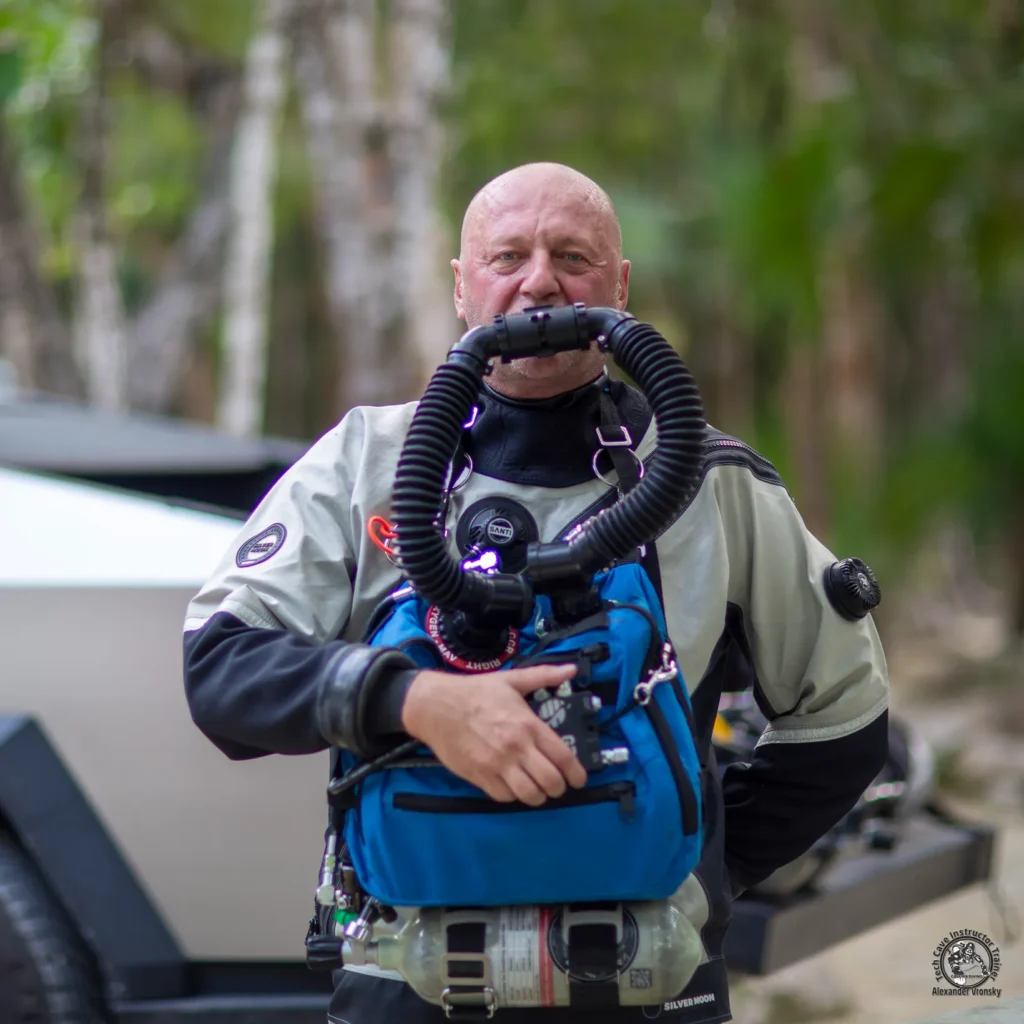
For a manual unit this matters even more. The GBM and S7 have no solenoid to back you up, the needle feeds oxygen all the time, and you press the button yourself. A diver who comes to them from the Meg or its descendants brings a reflex: oxygen from the button goes straight to the mouth, and the numbers move only after the breath. Here it is the other way round, and this is worth retraining in the water. And on the Dual CCR course, with a GBM on the chest and an S7 on the left side of one diver, you get two units with the same feed logic but loops that run in opposite directions. This is also part of the training.
Courses we teach on the GBM and S7
CCR Nitrox / Helitrox / ART on the GBM or the S7. It is one course: assembly, calibration, tests, needle setting, manual pO2 control, failure drills and bailout to open circuit, with depth up to the Helitrox level. The price is $398 per training day.
CCR Normoxic Trimix and CCR Trimix on the GBM. This is the next step in depth for divers who already dive the unit with confidence. The price is $398 per training day.
Dual CCR Diver. Any two rebreathers on one diver. Both units are equal partners, you breathe from them in turn, and having two rebreathers does not replace your bailout gas. The price is $448 per training day. For divers who have done Dual CCR and built experience on it, there is Dual CCR Cave Diver: $498 per training day.
CCR Cave on any rebreather that takes off-board gas, including your own.
If you have never breathed from a rebreather, start with the Discover CCR program. It is one day at a cenote: an overview of rebreather types and how to choose your first unit, a fitting of all units, then assembly and a dive in pool-like conditions on the one you choose. You pay for materials, absorbent and gases, $98, and this amount counts toward the price of your first CCR course. The cenote entrance fee is paid on site.
You can rent the GBM and S7 for a course or buy them from us: the S7 from $6,990, the GBM TEG $7,069. Volume discounts for unit plus course are discussed during the order. To book or ask questions, write to us on WhatsApp: the number is in the site header.
Instead of a conclusion
Neither layout is better than the other in absolute terms. One puts measurement and predictability at the centre, the other a fast response and freedom of configuration. Manual units like the GBM and S7 take the oxygen feed from the first and add a fast diluent at the inhale. The real danger is something else: not knowing which layout you carry on your back, on your chest or at your side. If you dive a rebreather, you must be able to draw its loop from memory, with arrows, with the oxygen and diluent feed points and with the place of the sensors. And you must be able to explain why the designer put them there.
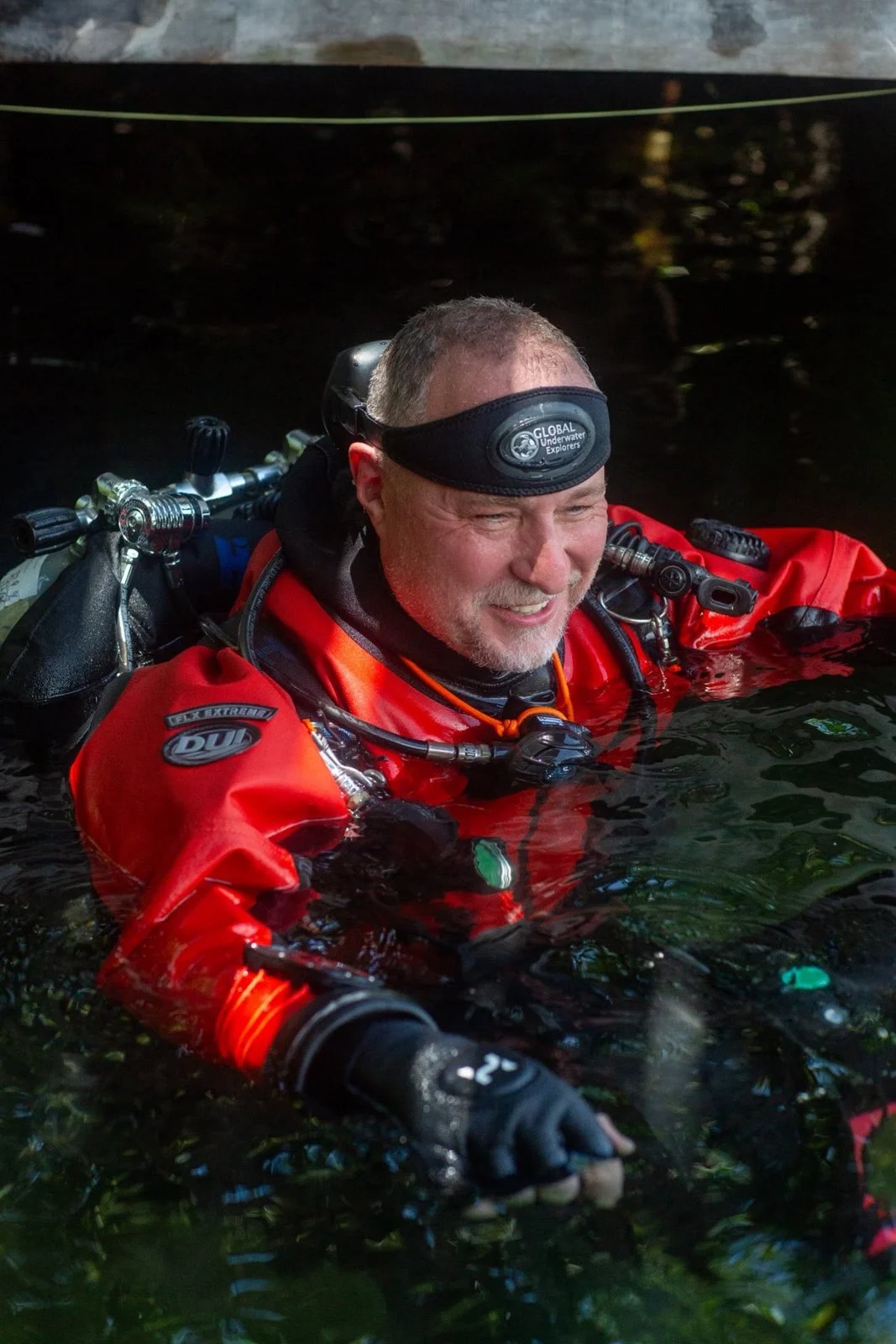
Your instructor: Alexander Vronsky
IANTD and IDF Instructor Trainer. IDF Course Director.
Alexander trains cave and technical divers, rebreather divers and the instructors who teach them, year-round, in the cenotes and caves of the Riviera Maya, home to the longest underwater cave systems in the world.
Cave and technical instructor trainer: Cavern to Technical Cave, Technical to Master Deep. CCR instructor: Dual CCR and Dual CCR Cave; GBM CCR from Nitrox to Trimix 100; S7 CCR from Nitrox to Helitrox; CCR Cave, CCR Technical Cave and CCR Expedition Cave on GBM, S7, SF2, JJ and Fathom. Authorized dealer for S7 and GBM rebreathers. SDI and TDI instructor.
GUE Member. GUE Cave 2, Cave DPV, Cave CCR, CCR 2, Tec 3.
Elected representative of CREER, the regional cave diving committee of Quintana Roo (Comité Regional de Espeleobuceo, Ecología y Regulación).
Alexander teaches the cave and technical courses himself, in English and Russian.
An engineer by training, Alexander ran large-scale technical and broadcast operations in telecom and for the Olympic Games before diving became his profession. That experience shows in how every course here is planned and run.
Sources
[1] Divernet, A brief history of leisure-diving rebreathers: https://divernet.com/scuba-news/a-brief-history-of-leisure-diving-rebreathers/
[2] Therebreathersite, The history of Biomarine: https://therebreathersite.nl/the-history-of-biomarine/
[3] X-Ray Mag, Rebreathers in sport diving, early days: https://xray-mag.com/content/rebreathers-sport-diving-early-days
[4] Therebreathersite, Cis-Lunar 1984: https://therebreathersite.nl/cis-lunar-1984/
[5] Divernet, The Technical Diving Revolution, part 3: https://divernet.com/scuba-diving/the-technical-diving-revolution-part-3/
[6] divers24, The end of the Inspiration Classic rebreathers, 16 May 2024: https://divers24.com/the-end-of-the-inspiraton-classic-rebreathers/
[7] AP Diving, A history of innovation: https://apdiving.com/en/?p=547
[8] Therebreathersite, Ambient Pressure Diving at BOOT 2005: https://archief.therebreathersite.nl/02_Photo_Galleries/Boot%202005_sub_files/ambient_pressure_diving1.htm
[9] AP Diving, Inspiration technical specifications: https://www.apdiving.eu/en/?p=4542
[10] Seattle Weekly, In Too Deep: https://seattleweekly.com/news/in-too-deep
[11] Rebreather Zone, ISC Megalodon Rebreather: https://www.rebreatherzone.com/en/isc-megalodon-rebreather-training/
[12] Navy Experimental Diving Unit, Megalodon test report: https://apps.dtic.mil/sti/tr/pdf/ADA549996.pdf
[13] Advanced Diver Magazine, COPIS Megalodon mCCR: https://advanceddivermagazine.com/articles/copis/copis.html
[14] Shearwater Research, Wikipedia: https://en.wikipedia.org/wiki/Shearwater_Research
[15] AP Diving, Rebreather Vision Instruction Manual, November 2012: https://www.apdiving.com/en/wp-content/uploads/Rebreather_Vision_-Instruction-Manual-Nov12.pdf
[16] InnerSpace Systems, Megalodon Frequently Asked Questions: https://web.archive.org/web/20240101172137/https://www.bluelabeldiving.com/wp-content/uploads/2013/02/megalodon_frequently_asked_questions.pdf
[17] Dive Rite, O2ptima, Oxygen Manual Addition Valve: https://manuals.diverite.com/?p=444
[18] Paragon Dive Store, Divesoft Manual Addition Valves: https://www.paragondivestore.com/collections/manual-addition-valves
[19] ISC, APECS Operational Instructions v2.7: https://manualshive.com/en/manual/isc/apecs/2092316?page=8
[20] TDI aquaCorps, Kevin Gurr: https://www.tdisdi.com/aquacorps/kevin-gurr
[21] CCR Explorers, Where should O2 be injected?: https://www.ccrexplorers.com/community/threads/where-should-o2-be-injected.13804/
[22] X-Ray Mag, Dive Industry in Denmark: The JJ-CCR Story: https://xray-mag.com/content/dive-industry-denmark-story-jj-ccr
[23] Blue Label Diving, JJ CCR CE: https://www.bluelabeldiving.com/jj-ccr-ce/
[24] Shearwater, company timeline: https://shearwater.com/pages/company-timeline
[25] Advanced Diver Magazine, GBM: Chest Mounted Rebreather, interview with Gregory Borodiansky and loop diagram: https://advanceddivermagazine.com/gbm.html
[26] InDEPTH, Andrew Goring, The S7 Rebreather: How Small Can a CCR Be?, 21 April 2026: https://indepthmag.com/s7-rebreather-size-of-a-ccr/
[27] InDEPTH, The Who’s Who of Sidemount: Andrew Goring: https://indepthmag.com/tag/andrew-goring/
[28] S7 CCR, official site: https://s7ccr.com/